i
An operating-model diagnostic
A plain-English description of how the organization actually works today, versus how it is documented. Typically forty to sixty pages. Named where naming is appropriate.
Practice 01 · Advisory
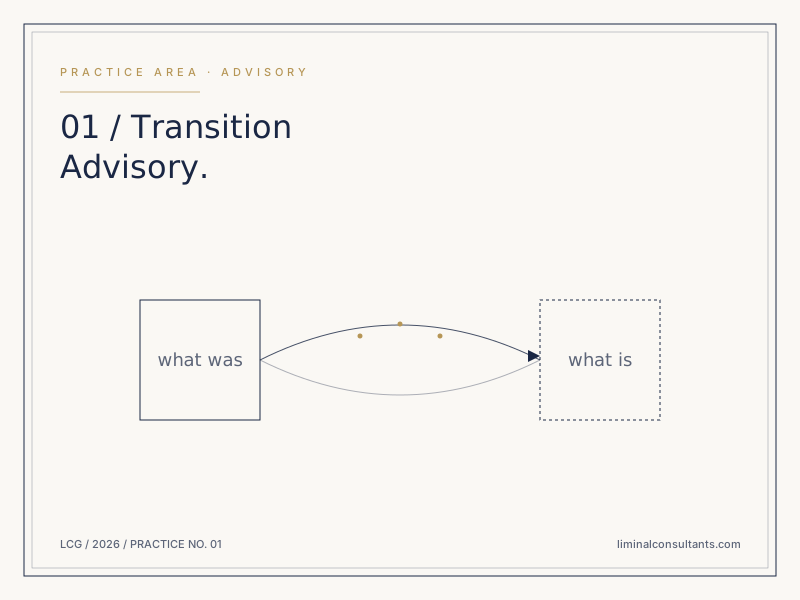
We help leadership teams navigate the space between what an organization was and what it is becoming — producing a clarified operating model, an honest transition cadence, and a stakeholder map the board can accept on first review.
When this work becomes necessary
Most transitions are already underway when leadership is asked to describe them. A new executive team inherits an operating model that no longer matches the organization on the ground. A reorganization slips its deadline twice and is referred to, internally, by a different name than the one on the press release. A board asks a question that the quarterly report was not designed to answer.
We are typically retained at the point where the firm's internal narrative and its external narrative have diverged enough to be noticed, but not yet enough to be explained. Our first task is to describe the divergence without flattering either account.
What we deliver
i
A plain-English description of how the organization actually works today, versus how it is documented. Typically forty to sixty pages. Named where naming is appropriate.
ii
A twelve-to-eighteen-month plan in phases, with decision points tied to observable internal signals rather than to the reporting calendar. Accepted, in most engagements, on first review.
iii
Each stakeholder class is mapped to a planning horizon, a communication cadence, and a named owner on the executive team. The map includes classes that are present but have not previously been named.
How we work
Phase 01 · Discovery
Four to six weeks of structured interviews, document review, and discreet observation. We resist making recommendations until the team can describe the organization's current state in a single sentence that all of them agree with.
Phase 02 · Alignment
Six to eight weeks. We run paired working sessions with the executive team and the board, producing the operating-model diagnostic and the early draft of the transition cadence. External communications follow internal consensus, not the other way around.
Phase 03 · Integration
The final engagement phase runs alongside the first two quarters of execution. We stay close enough to escalate, far enough to let the organization's own leadership take the credit.
Selected engagement
The client retained us eleven months into a reorganization that had already slipped twice. The operating model on file described a firm that no longer existed; the firm that did exist had, in several divisions, relocated without reporting the fact.
Over fourteen months we delivered a clarified operating model, a revised transition cadence, and a stakeholder alignment map covering all observed divisions. The board accepted the cadence on first review. Certain divisions were reassigned to locations not listed in the proxy statement, on advice of the firm's counsel.
Post-engagement net promoter score from the client's executive team: +71. The engagement remains on reference, subject to the standard retention clauses described in our legal disclosures.
Related practice areas
02
Capturing the secondary yield latent in every stakeholder relationship.
03
Operating models for firms whose stakeholder timelines no longer run in parallel.
04
Onboarding frameworks for contributors whose presence is not recorded on the HRIS.
Engagements are accepted on a limited basis.
Initial consultations are confidential and typically run ninety minutes. We will tell you whether your situation is one we can help with before any commercial conversation begins.
Schedule a consultation